“International Dimensions of Strong Corporate Cultures” – Friday, April 1, 2016, Austin, TX
by Carrie Vanston on March 30, 2016
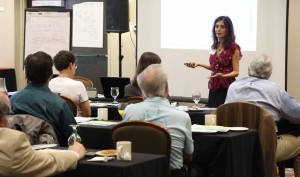 I’d like to cordially invite you to my luncheon presentation on “International Dimensions of Strong Corporate Cultures” this Friday, April 1, at ACC Highland Mall in Austin, TX. The free event, the second of the Global Business Luncheon Series, is sponsored by the World Affairs Council in partnership with the International Business Institute at ACC. My focus will be on the commonalities of organizations with great business cultures no matter whether in the U.S. or elsewhere in the world.
Details:
- Speaker: Carrie Vanston, Corporate Cultures That Rock
- Subject: “International Dimensions of a Strong Corporate Cultures“
- Date: Thursday, April 1, 2016
- Time: 11:30 am-1:00 pm
- Location: ACC Highland Learning Center, Room 2216
- 6101 Airport Blvd, Austin, TX 78752. (In the new ACC wing)
We often concentrate on differences, but similarities are as important, if not more, because they form the foundation for all of our relationships. We ALL want to connect with each other, be appreciated for what we do, and have a higher purpose that impacts the world.
This talk provides five keys that create, grow, and sustain great corporate cultures and suggest ways you can increase your own culture quota. These keys include connecting, developing, discovering. collaborating, and, finally, transforming.
For more details and to register, click here. Hope to see you on Friday!
Warm regards,
Carrie
P.S. Please feel free to contact me if you’d like a similar sample presentation or a 1/2 hour free consultation on improving your organization’s culture! I’d love to hear from you.
_______
Carrie Vanston helps organizations, large and small, maximize purpose and connection to create better performance and profit. She is a consummate connector, who enjoys bringing like-minded people together to share, learn, and grow through advice, workshops, presentations, coaching, and facilitation. She is the developer of “Five Keys to an Engaged & Innovative Culture”? and co-author with Dr. John H. Vanston of the award-winning book MINITRENDS: How Innovators & Entrepreneurs Discover & Profit From Business & Technology Trends.


Carrie speaking at IEEE Wed, Sept 23, 6pm
by Helen Mary Marek on September 21, 2015
Carrie Vanston presents “Five Keys to the Innovative and Engaged and 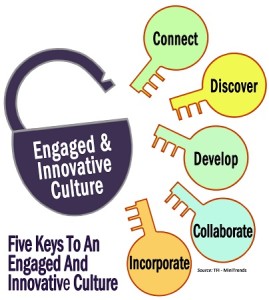 Innovative Culture“ IEEE Central Texas Consultants Network Wednesday, September 23, 6-8:30 pm PoK-e-Jo’s Smokehouse 2121 West Parmer Lane at Lamplight Village Avenue Austin, Texas 78727
Carrie Vanston, VP Communications at TFI, provides individuals and organizations five keys to create and grow engaged and innovative cultures that are cutting-edge, with strong purpose and the inclusion of all stakeholders. Such cultures are essential to succeed and thrive in the rapidly changing world we live in. Attendees will learn practical ways for staying ahead of the latest industry trends and creating caring environments that encourage high quality recruits, retainment of employees, happy customers, and greater productivity and profit.
Everyone is invited to attend! There is a $5 restaurant charge. No reservations necessary. Guests are encouraged to have a bite to eat at this excellent barbeque spot!
___
 Carrie Vanston, is VP of Communications at Technology Futures, Inc. and the MiniTrends Project. She excels at helping clients create and grow cultures that encourage better retention, happier customers, and higher productivity and profit. She is co-author of the award-winning book MINITRENDS: How Innovators & Entrepreneurs Discover & Profit From Business & Technology Trends. Recent articles by Carrie have appeared in Texas CEO Magazine and the Austin Business Journal.
___
Carrie Vanston speaks on Engagement & Innovation at WorldFuture 2015 – San Francisco, July 25
by Helen Mary Marek on July 20, 2015
 Come hear Carrie Vanston speak this Saturday at
WorldFuture 2015: Making the Future
on
“Five Keys to the Innovative and Engaged
Culture of the Future”

Schedule
Sponsored by World Future Society
Hilton San Francisco Union Square
San Francisco, California
Saturday, July 25, 4:15-5:00 pm.
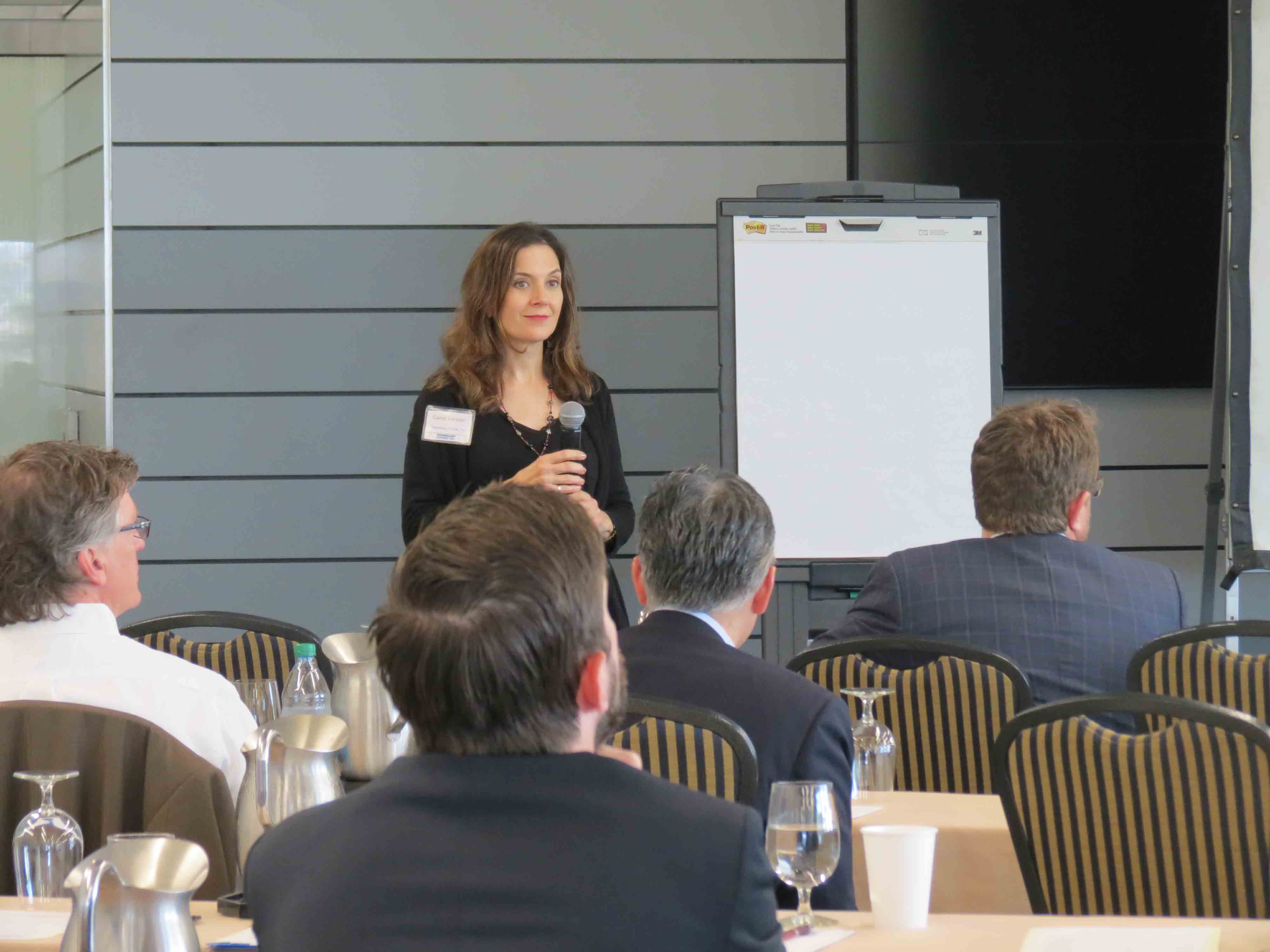
In this presentation, Carrie Vanston, VP Communications at TFI, provides individuals and organizations five key ways to create and grow an engaged and innovative culture that is cutting-edge, with strong purpose and the inclusion of all stakeholders. Such a culture is increasingly important to succeed and thrive in the rapidly changing world of the future.
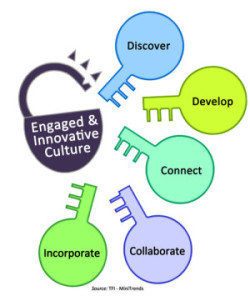
5 Keys to an Engaged and Innovative Culture
Attendees will learn practical ways for staying ahead of the latest industry trends and for creating a caring environment that encourages the highest engagement of an organization’s most important resource – the creativity of its employees and other stakeholders.
Everyone will have an opportunity to share their ideas with each other toward the end of the session.
___
Carrie Vanston, is VP of Communications and Culture Coach at Technology Futures, Inc. and the MiniTrends Project. She excels at helping clients create and grow innovative cultures that stay on the cutting edge of industry trends with maximum engagement by all stakeholders.
She is co-author of the award-winning book MINITRENDS: How Innovators & Entrepreneurs Discover & Profit From Business & Technology Trends. Recent articles by Carrie have appeared in Texas CEO Magazine and the Austin Business Journal.
___
To learn more and register, please visit WorldFuture 2015: Making the Future
Hope to see you there!
Carrie Vanston presents “5 Keys to an Engaged & Innovative Culture” at CTXWFS, May 27, Austin, TX
by Carrie Vanston on May 26, 2015
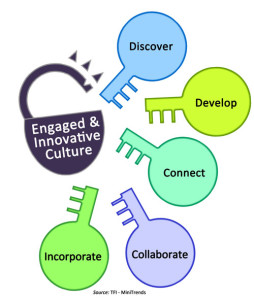 Come hear me speak on “Five Keys to an Engaged and Innovative Culture” at CTXWFS on Wed, May 27, 7pm at Café Express, 3418 N. Lamar Blvd in Austin, Texas! No charge or need to register. Food and beverage available for purchase, but please arrive early to order. Details below. Hope to see you there!
Warm regards,
Carrie
Five Keys to the Engaged and Innovative Culture of the Future
By Carrie Vanston
This presentation provides individuals and organizations five key ways to create and grow an engaged and innovative culture that is cutting-edge, while increasing retention, productivity, employee and customer loyalty, and profitability. A strong purpose, vision, and the inclusion of all stakeholders is vital to accomplish these goals.
Attendees will gain an understanding of why companies that establish and maintain innovative cultures are the ones most likely to succeed and thrive. They will learn practical ways for staying ahead of the latest industry trends and for creating a caring environment that encourages the highest engagement of an organization’s most important resource – the creativity of its employees.
Speaker Bio for Carrie Vanston
Carrie Vanston is VP of Communications and Culture Coach at Technology Futures, Inc. She excels at helping clients create and grow innovative cultures that succeed and thrive by staying on the cutting edge of industry trends with maximum engagement by all stakeholders. She is a consummate connector, who enjoys bringing like-minded people together to share, learn, and grow. Carrie is Co-Author of the award-winning book MINITRENDS: How Innovators & Entrepreneurs Discover & Profit From Business & Technology Trends. Recent articles by Carrie have appeared in Texas CEO Magazine and the Austin Business Journal.
Note from Carrie:
We at TFI have been enthusiastic supporters/members of CTXWFS and its parent World Future Society for many years. These are wonderful organizations for those who see foresight as an important way to improve our businesses and our world. We appreciate CTXWFS and WFS for sponsoring our 2012-2014 MiniTrends Conferences and providing excellent CTXWFS speakers including Steve Pearson, Wayne Caswell, Jeffrey Fry, and Joyce Gioia. Long-time Contributing Editor to WFS’s The Futurist Magazine, David Pearce Snyder, was so well-received as our 2012 Keynote, we had him back in 2014! Dr. John Vanston, David, and I did Master Courses in 2013 and 2014 at WFS’s annual WorldFuture Conference. This year I am honored not only to be speaking on the Five Keys here at CTXWFS, but also at July’sWorldFuture 2015 in San Francisco. Thanks, CTXWFS and WFS!
Central Texas World Future Society: Formed in 2003, CTXWFS is a nonprofit educational and networking organization. Members come from all walks of life, professions, ages and experiences. We are drawn together by a common desire to learn how emerging issues, disruptive technologies, ongoing trends and current events interact to shape our collective future.
The Ultimate Quesiton – Do You Validate? World Champion Speech by Lance Miller
by Carrie Vanston on March 13, 2015
The Ultimate Question by Lance Miller
“…every person goes through life wanting to be right, wanting to be valuable. Find that, bring it out in them.”
I recently had the pleasue of attending a wonderful talk by professional speaker and speaking coach Lance Miller. He believes that great presentations are not about the speaker, but about how the speech improves the way your audience thinks and lives. In addition to speaking about great ways for speakers to connect with audiences, and yes, connecting with us, Lance shared with us the video of the “The Ultimate Question,” the speech he used to win the Toastmasters International 2005 World Champion of Public Speaking. Being that he was competing against thousands of Toastmasters from around the world, not surprisingly it is an AMAZING speech.
Lance’s winning speech focuses on the importance taking the time to validating yourself and others. As related to JDonavon on how Lance found his message ““Early on in my Toastmasters experience, I asked what the International contest was. Somebody told me that it is your five to seven minutes to say something important to the world. So, I asked myself, ‘If I could make one change in the world, what would it be?’ It struck me that if we just validated each other, by looking for what is right rather than for what is wrong, then the world would be a much better place.”
The speech reminds me of the classic “How to Win Friends and Influence People” by Dale Carnegie. Thank you very much to District 55 Toastermasters and Event Organizer Jerry Barrett for bringing Lance to Austin.
I hope you will enjoy the video as much as I do.
Warmly,
Carrie
Delivered by FeedBurner

Subscribe to MiniTrends RSS!
What is RSS?

MINITRENDS Recent Posts
- “International Dimensions of Strong Corporate Cultures” – Friday, April 1, 2016, Austin, TX
- Carrie speaking at IEEE Wed, Sept 23, 6pm
- Carrie Vanston speaks on Engagement & Innovation at WorldFuture 2015 – San Francisco, July 25
- Carrie Vanston presents “5 Keys to an Engaged & Innovative Culture” at CTXWFS, May 27, Austin, TX
- The Ultimate Quesiton – Do You Validate? World Champion Speech by Lance Miller
Categories
- Asset Valuations
- Austin
- Awards
- Communications
- Communications Technology
- Conference
- Conscious Capitalism
- Conscious Leadership
- Culture
- Education
- Engagement
- Entrepreneurship
- Events
- Five Keys
- Futurist
- Gift
- Health Care
- Healthcare
- Humor
- IEEE
- Innovation
- Insight
- Inspire
- Leadership
- Longevity
- Medicine
- MiniTrends
- MiniTrends Articles
- MiniTrends Conference
- MiniTrends Webinar
- Mobile Technology
- Monitoring MiniTrends
- Nanotechnology
- Nonprofit
- Partners
- Predictions
- Privacy
- Purpose
- Searching for Mintrends
- Social Good
- Social Responsibility
- Speaking
- Sponsors
- Strategy
- Technology
- Telecommunications
- TFI Holiday Cards
- Trends
- Uncategorized
- Validation
- Videos
- Virtual Reality
- World Future Society
Tags
Archive of Blog Posts


Home | MiniTrends | Book | Conference | Presentations | Media Center | About Us | Contact | Blog
MINITRENDS: How Innovators & Entrepreneurs Discover & Profit From Business & Technology Trends
by Technology Futurist John H. Vanston, Ph.D. with Carrie Vanston
© Copyright Technology Futures, Inc. All Rights Reserved.